


 18 / 24

Herbert Gayle
Contributor
What must change
I
N THE 2007
Forced Ripe Report
(Gayle
and Levy), young men in three different
inner-city and working-class communities
stated that the police could not protect them,
when “in reality, they need protection from
us”. According to the young men, “The
police can protect women and children, and
middle-class people, but not us. Is a war
thing between us.”
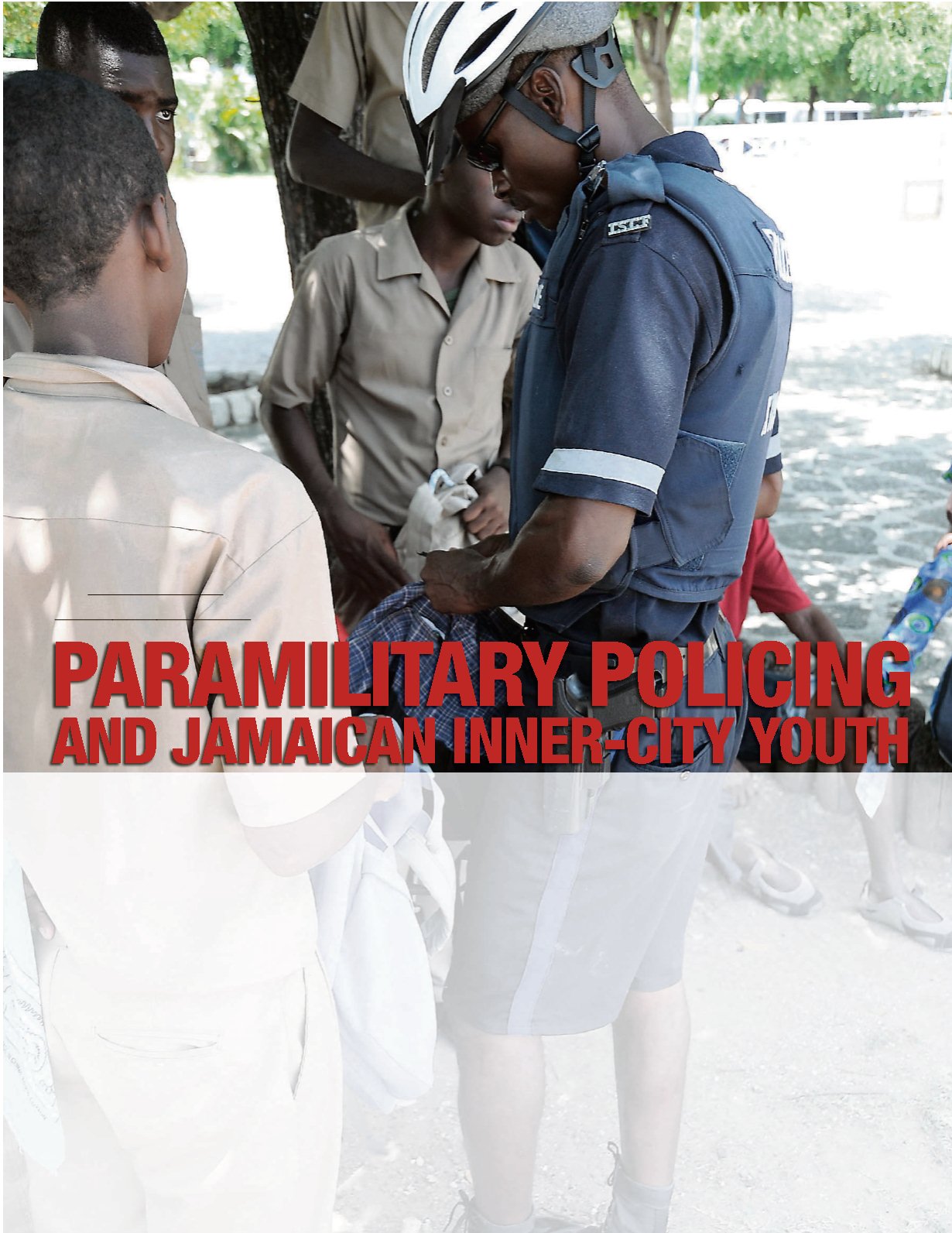
In Jamaica, police work climate, policing
style, and the treatment of the police and
inner-city youth by society contribute to a
disastrous relationship between police and
young men. The situation is a recipe for
civil war in which both the State and inner-
city males suffer high casualties.
Policing is one of the most hazardous pro-
fessions in the world. More than a half of all
police deaths are usually accidental, with
road fatalities, drowning, and burning rank-
ing among the most frequent. Nonetheless,
in the most violent countries, the majority of
slain police officers are usually murdered,
suggesting a difference in policing policy
and process, as well as an aggressive youth
attitude towards the police.
In New Zealand, one of the most peaceful
countries in the world, only four police officers
were killed by criminal acts between 2000 and
2011. This produces a police death rate by crimi-
nal acts of three per 100,000, compared to 150
per 100,000 for the same period for the Jamaican
police. Over the same period, Jamaica’s average
homicide rate was 50 per 100,000; but 350 for
inner-city young men (15-34 years) in the
Greater Kingston area. This rate is almost twice
the rate of deaths (205 per 100,000) in the Iraqi
War and Occupation of 2003 to 2011. Not sur-
prising, the police killed an average of 200 young
men per year for this period – and on average, 13
officers were killed yearly.
EXTREME FEAR
Societies with homicide figures above the
civil-war benchmark (30 per 100,000) such
as Jamaica and South Africa have so much
violence that policing is characterised by
extreme fear. In such settings, an officer’s
preoccupation often shifts from that of pro-
tecting others to that of protecting himself.
In New Zealand, England and most other
stable societies, the average police officer does
not carry a gun on his person. In these coun-
tries, lethal weapons are carried concealed in
service cars, or are carried by various special
strike forces called upon in events of emer-
gency or extreme violence. In countries such
as Jamaica and South Africa, policing is done
as if the countries are in a permanent state of
emergency. Officers are armed with hand guns
and sometimes assault rifles and are psycho-
logically locked in a state of war-readiness.
PUBLISHED:
FEBRUARY 1, 2017
There are many
Jamaicans who
support the police
and youth killing
each other. We
ascribe a value to
the lives of both
inner-city youth
and frontline
police, both of
whom are unfortu-
nately from the
underclass. ... We
treat the death of
anyone from the
merchant class as
a catastrophe, but
the death of a
peasant with
indifference.
“
”