'The Green Pond'
You can find one of Jamaica’s hidden treasures in the beautiful parish of St. Ann. Walkerswood is a spice lover’s paradise. Bright, welcoming colours, a verdant garden, complete with a stone fountain, greeted the Gleaner Online team at the main entrance of Walkerswood Caribbean Foods Limited. Making our way to the administrative office, we were greeted by Claudette McFarlane, our guide for the day who took us through the rich history and many wonders of Walkerswood.
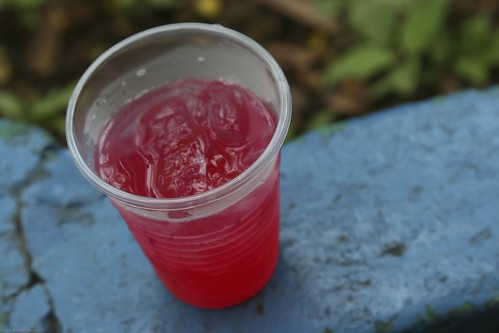
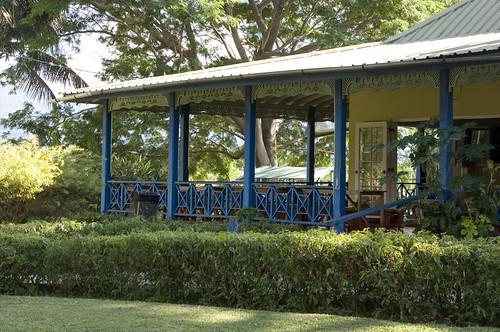
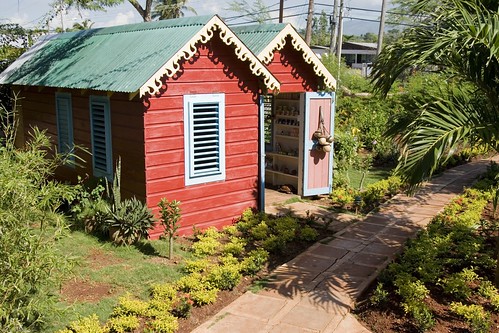
The Pimento Porch Clubhouse was our first stop. With our complimentary drink in hand, we went in, feasting our eyes on the well-kept specimens of how life was back in the 1960s. The old cold stove and the dry coconut brought back memories for some of us… (I think).

Seasonings used at the Spice Making Hut at Walkerswood, St. Ann, Jamaica.
The Spice Making Hut was our next stop… There we were given samples of ingredients that Walkerswood use to make their chutneys, sauces, marinades and pepper. While my colleague Peter took pictures, I tried to make a little creation of my own with pepper, pimento seeds, thyme a little escallion and some other ‘secret ingredients’. As I grounded them, the fresh, earthy and spicy aroma of the seasonings reminded me of my mother’s Sunday evening chicken. Yum!
 Go-Jamaica team member Kerry-Ann smiles for the camera at The Pimento Porch Clubhouse at Walkerswood Caribbean Foods Limited, Walkerswood, St Ann.
The Spice Factory
Walkerswood is surrounded by a beautiful landscape, which is home to many varieties of herbs and spices. As we entered the factory where the Walkerswood products are made, our nostrils were filled with the earthy richness of their scents.

Go-Local Team Member. Kerry-Ann having a taste of the Walkerswood Sorrel Chutney.
Making our way upstairs we saw what looked like a stall. It even had the plaque that said, ‘OH LORD, HELP ME THIS DAY TO KEEP MY MOUTH SHUT’ and another, which sounded like a Bible verse, ‘…THERE THE FIRE GOETH OUT. SO WHERE THERE IS NO TALE BEARER, THE STRIVE CEASETH’. Some pretty strong words… We then realised that this was the moment we were waiting for – the Tasting Booth.
We were given two bags of cream crackers and three bottles of what looked like sauces and placed them on the table. Peter’s eyes were fixed on the bottle that read ‘Sorrel Chutney’. He helped himself to a generous amount on the cracker to taste. Let’s just say after the first bite, he could not get enough of it. The heavenly taste of the Coconut Rundown Sauce made me almost pinch myself. Not to mention the Calypso Chutney – simply delicious!
As you may have guessed Walkerswood has won many awards for its work, including the Gleaner’s Business Honour Award for its impact on the farming sector in central Jamaica. It has also been recognised by the St Ann Chamber of Commerce for its contribution to the community.
 Walkerswood Jerk Marinade and Ackee in Brine.
A Little Walkerswood History
Tucked away in the hills of St Ann, Walkerswood Caribbean Foods has worked to bring a taste of the Caribbean to the world with an innovative line of traditional cooking sauces, spices, seasonings, preserves and canned vegetables.
In 1976, with the assistance of the Jamaica Industrial Developoment Corporation, Walkerswood Caribbean Foods embarked on its first project of ‘jerking’ pork which it sold to

Walkerswood products.
local bars. ‘Jerk’ pork was a firm local favourite and many villagers reared pigs in their back yard. Two persons were employed. The company’s objective was to ensure that everyone in the community who wanted to work could get a decent job. The village had been losing its young people to the urban lures of Kingston and Ocho Rios.
The company was incorporated in 1978. In the next years it added other products to its range and decided to bottle its Jerk

Walkerswood Coconut Run Down Sauce and Calypso Chutney.
Seasoning for sale in 1983 – realising the wide application of the seasoning with other dishes and the religious objections that many had to eating pork. Many letters from abroad started arriving requesting the seasoning. This led the company to be the first Jamaican Exporter of jerk seasoning from 1986. Since then, Walkerswood’s range of products has grown to over 20 and includes popular sauces such as Coconut Rundown, Escoveitch Pickle Sauce and the most recent addition in 2002, a feisty little pepper sauce called ‘Firestick’.
Source – www.foodreference.com
‘Ole Time T’ings’

Ole Time Tings: Ice Grinder.
Elements of Jamaica’s rich history were still alive and well at the Ole Time T’ings House at Walkerswood. “This is what they used to grind the ice in those times”, said Claudette as she told us about the ‘ole time’ ice grinder. The house was also home to molasses in a white rum bottle, a vintage sewing machine, a coconut brush and a coconut bough broom, which was used to shine the floor. There was also a good old white pail. Claudette told us in the evening, a hole would be dug in the earth and the pail would be filled with water and placed in the hole. By morning, the water would be as cool as if it were coming straight from a refrigerator.
She also showed us some of the spices and plants grown on the property. These included Leaf of Life, escallion, sorrel, garlic, Dog Blood, pepper and many others. To our surprise, Peter picked a Leaf of Life and ate it raw. “It tastes like Jamaican green cherries!” he exclaimed. “I’ll pass on that one”, I said. Claudette chuckled.

'Flame of the Forest'
On our way back to the car, I asked about a beautiful flower I had seen near the Spice Making Hut. I was drawn to it by its colour – bright red petals with gold tips. That flower is called the ‘Flame of the Forest’ and it has its origins in India we were told. According to our guide it is said in India if a young man should “enjoy” his female partner under this flora, she would not get pregnant. Hmmmmmm.
I also enquired about a bed of leaves that seemed to be perfectly joined together. “It’s actually a pond”, said Claudette. I just stood there, astonished at how seamlessly the leaves covered every inch of the body of water. Hardly giving evidence of what might be lying underneath. Truly amazing!
If you would like to enjoy the wonders of Walkerswood, call 917-2318, or fax 917-2648.
Tours are conducted on weekday and are 45 minutes long.