



 5 / 24

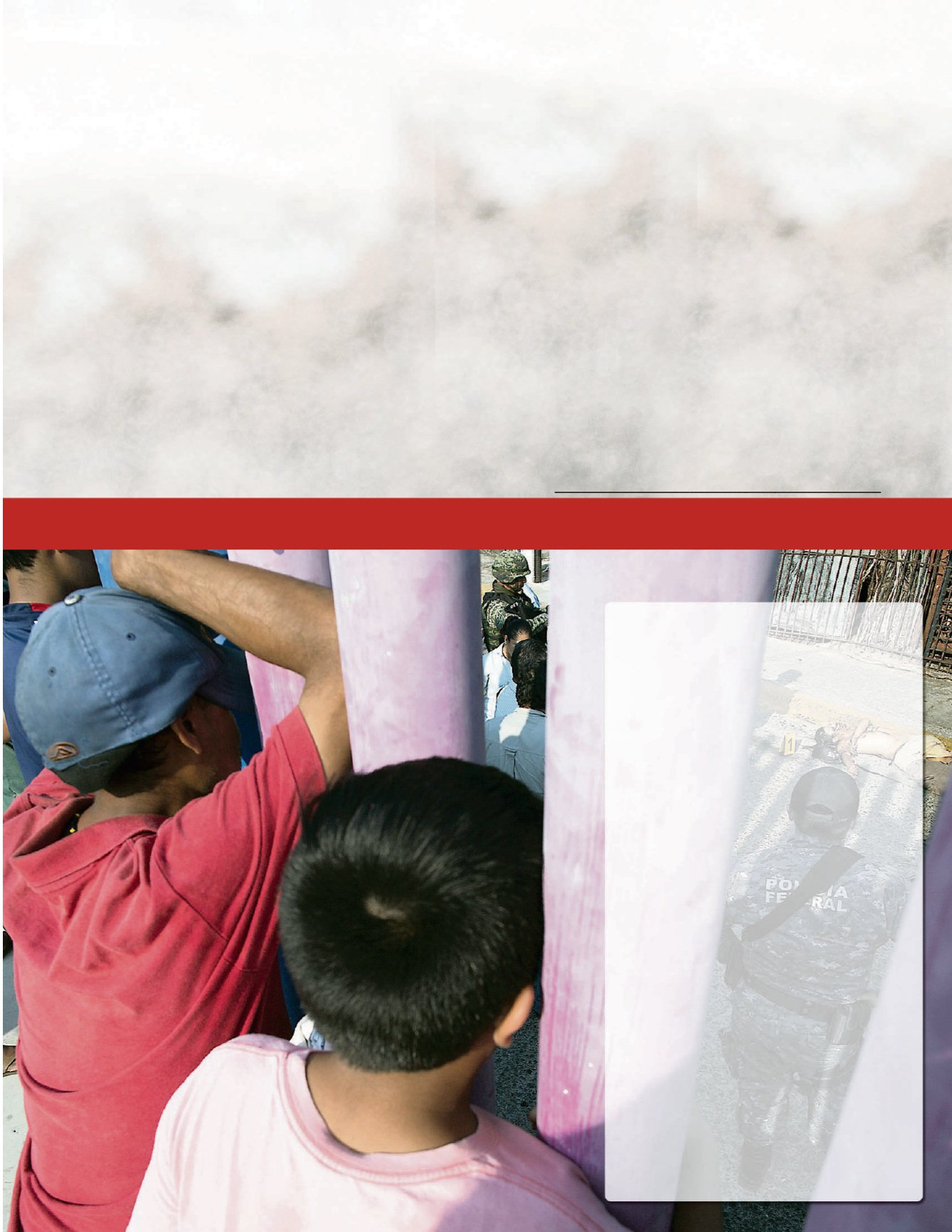
HERE ARE SOME OF THE FORMS OF VIOLENCE
YOU WILL SEE IN AN INNER-CITY COMMUNITY:
Political:
on
the grounds that
the victim
belongs to the
opposing political
party; also public
violent protest
aimed at getting
the attention of
government
Economic:
drug-related vio-
lence associated
with trafficking of
especially cocaine
and marijuana;
hustle-related
harm done to per-
sons who attempt
to stop armed
youth from
achieving eco-
nomic goals; con-
tract violence, the
use of mercenar-
ies; ‘Matey War’
involving women
fighting each
other for the tro-
phy of a money-
earning male
Turf/communi-
ty war:
corner
crews (youth
organised for the
purpose of friend-
ship and protec-
tion rather than to
commit crime)
attacking other
groups due to the
fact that they feel
that their commu-
nity has been
threatened
Gang:
three or
more young per-
sons operating
together for a
period exceeding
three months, or
with some degree
of permanence,
organised hierar-
chically (have a
leader, second-
tier command,
and a ‘happy to
act’ base) who
compete with
another or other
such groups vio-
lently for power
and/or money
Interpersonal:
Violence on a
personal level:
‘Tenant War’ (vio-
lence between
persons living in a
tenement situa-
tion), or ‘Family
War’ (violent con-
flict between fami-
lies due mainly to
insult, or physical
injury to a family
member by some-
one from another
family living in
proximity to each
other.
Domestic:
spousal, internal
family conflict,
and child abuse
Four forms of violence we
need to worry about:
1
Direct
violence:
intended to
harm or
hurt, carried
out by vio-
lent actors. It
is visible,
graphic and
destructive
and is the
form that is
most feared.
2
Structural vio-
lence:
custom-
ary, structured,
often unintended,
mostly invisible,
sometimes every-
one is involved.
Structural violence
can be the result
of frozen or past
direct violence
such as slavery,
colonialism, eco-
nomic exploitation,
patriarchy.
3
Cultural
violence:
the legitimisa-
tion of the first
two as good
and right, set-
ting violence
within the frame
of morals – the
absence of a
moral frame to
reduce it. It is
often invisible,
but with clear
intent to harm
or even to kill.
4
Institutional vio-
lence:
This occurs
when a group thinks it
is their duty to harm
others. The police and
soldiers are not the
only ones here.
Anyone can feel it is
his duty to treat anoth-
er person with violence
for the common good
of a group or even the
victim. Some parents
and religious leaders
are involved here.
In Jamaica we publicly label inner-city youth as troublemakers.
PUBLISHED: JANUARY 24, 2017